
Parent-Teacher Conference Comments and Talking Points That Actually Help Families

It's fall conference week. The sign-up sheet is full, the slots run back to back, and your coffee went cold around the second family. By Thursday night you suspect you've said "doing great, just needs to focus a little more" more times than you'd like to admit.
Here's the thing. The parent across from you probably rearranged a work shift to be there. They need to walk out knowing how their kid is really doing and one thing they can do about it at home.
This guide gives you parent-teacher conference comments and talking points built on one formula: a strength, the evidence, and a next step. You'll get examples by situation, talking points for the harder conversations, a notes sheet you can fill in while you talk, and an honest look at where AI fits (and where it really doesn't).
What Families Actually Want From a Conference
Most of the good parent teacher conference tips for teachers land on the same few ideas. The Harvard Family Research Project's conference tip sheet for teachers frames the meeting as "a two-way conversation" and reminds you that "nobody knows your students better than their families." It also asks you to bring examples of student work, offer ideas families can use at home, and end with an action plan that says what each of you will do and how you'll check in.
Nicole Greene, writing in Edutopia on less stressful parent-teacher conferences, puts the core of it plainly: "Don't bring up a problem unless you have a plan to address it." She also says that at the core, parents want to know their child is "seen, valued, and genuinely liked."
That's a useful filter for every sentence you plan to say. Does it show you see this child? Does it come with something to do next? If not, it's probably filler.
A Three-Part Structure for Every Conversation
If you've read our post on the strength, evidence, next step formula for comments, this will look familiar. It works out loud just as well as it works on paper:
- Strength: something the student can genuinely do.
- Evidence: the specific work or moment that shows it.
- Next step: one small thing, ideally something the family can do at home.
Conferences add a fourth beat that report cards don't have: ask. After you share, ask what they're seeing at home. That's the "two-way" part, and it's often where you learn the thing that explains everything else.
Here's how that sounds with a made-up example (the placeholder [Name] stands in for any student):
"[Name] is really good at explaining her thinking in math. On last week's quiz she showed her steps on every problem, even the two she got wrong, which is how I could see exactly where she slipped. At home, it would help if she explained one homework problem to you a couple of nights a week. You don't need to know the math. Just ask, 'How did you get that?' What do you notice when she does homework?"
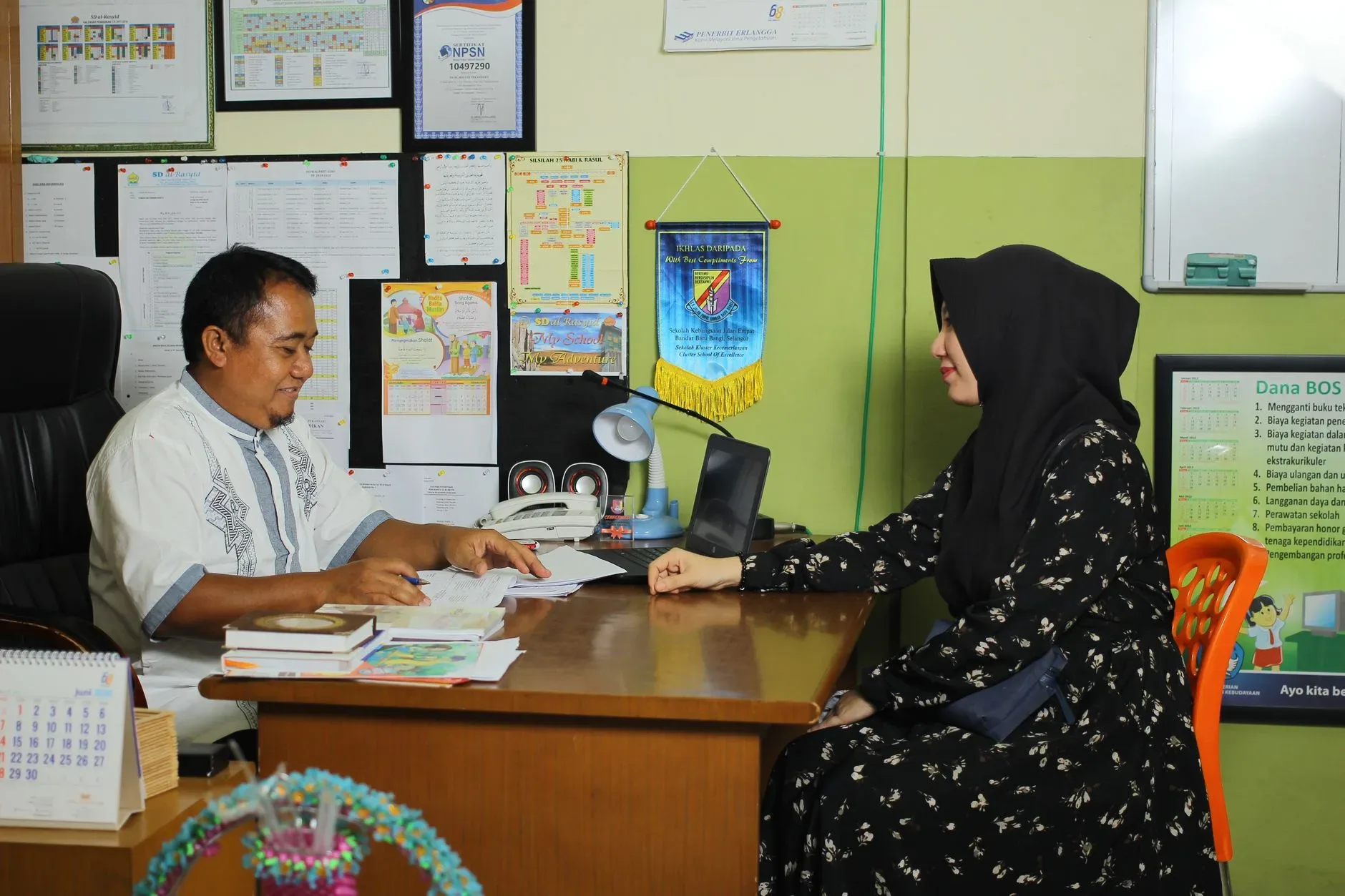
Notice the next step. It's small, it's specific, and a parent who hasn't done long division in decades can still do it. "Keep supporting her at home" gives a family nothing to try on Tuesday.
Parent-Teacher Conference Comments by Situation
Every example below is illustrative and made up. Treat them as shapes to adapt, not lines to read. The detail only you know about the student is what makes any of them land.

On track and steady
The quiet, steady kids get the shortest conferences, and that's a missed chance. These families want to hear specifics too.
"[Name] is one of the most consistent readers in the class. His reading log has an entry almost every night, and in discussion he's started pointing to the page to back up his answers. Next step: ask him to pick one book this month that's a little harder than usual. He's ready for it."
Struggling with a specific skill
Name the skill, not the subject. "Struggling in math" is scary and vague. "Still building fluency with multiplication facts" is something a family can work on.
"[Name] understands what multiplication means. She can draw it and explain it. Where she's getting stuck is speed with the facts, which slows her down on multi-step problems. Five minutes of fact practice a few nights a week, out loud or with flash cards, would make a real difference. I'm doing the same in class with a quick warm-up."
The last sentence matters. It tells the family you're working on it too, so they're not being handed the problem.
Missing work
Bring the list. A vague "he's missing some assignments" invites a vague "we'll work on it."
"[Name]'s quiz scores show he understands the material. The grade is lower than that because four assignments haven't come in yet, and I have them listed here. Could we agree on two by next Friday? I'll check in with him on Wednesday so it doesn't sneak up on anyone."
Behavior or focus
Describe what happens, not what the child is. "Talks during instructions" is observable. "A distraction" is a label that puts a parent on the defensive before you finish the sentence.
"[Name] has great ideas in group work, and the other kids listen to her. During direct instruction she's often talking with her neighbor, and she misses the directions. I've moved her seat closer to the front. At home, it might help to ask her each evening, 'What was one thing your teacher explained today?'"
Ready for more challenge
Families of high achievers often hear "doing great!" and nothing else. Give them a direction.
"[Name] finished every problem set this unit with very few errors, and he's started helping classmates without being asked. I'd like to stretch him with some open-ended problems that have more than one right approach. At home, puzzles, strategy games, or asking him to teach you something he learned would all feed that."
Kindergarten and early grades
Parent-teacher conference comments for kindergarten look different because the evidence isn't test scores. It's what you've watched the child do: follow a two-step direction, take turns, hold a pencil, sit through a story.
"[Name] can now write the first letter of most words she says, and she's so proud when she does. She still finds it hard to wait her turn at the carpet, which is completely normal right now. At home, simple turn taking games and reading together, where she points to the words, would both help."
Talking Points for the Harder Conversations
Some conferences need more than a formula. A few talking points worth having ready:
- When the grade surprises them. Open the gradebook and show the categories instead of defending the number. "Here's where the grade comes from" calms a room faster than "I promise it's fair."
- When a parent gets upset. Listen first, all the way to the end. Greene's advice in the Edutopia piece is that it's fine to table a conversation that isn't moving forward and come back "with fresh minds and more data." Pausing is not losing.
- When they ask something outside your lane. Families sometimes arrive with questions like "Should I ask the school to evaluate my child?" Take it seriously, share what you've observed, and connect them with the right person at school rather than guessing.
- When it's the first time they've heard about a problem. If a serious concern is news to the family in October, own that. "I should have reached out sooner, and from now on I will" goes a long way.
Bring the Gradebook, Not Just the Grade
A letter grade on its own starts arguments. A category breakdown starts conversations. Before conferences, pull three things for each student: category averages, a list of missing work, and one piece of actual work you can put on the table.
It's also worth taking a quick look at how your averages are calculated. An empty category or a zero that should have been a blank can make a Q1 grade look wrong for reasons that have nothing to do with the student. We walk through the common culprits in our post on how to check your category weights before conferences.
If your gradebook is a pile of tabs you rebuilt from scratch in August, the free Google Sheets gradebook template shows category averages and running percentages for each student, so you can see the breakdown at a glance.
A Conference Notes Sheet You Can Fill In While You Talk
Conference notes are the part everyone means to do and nobody does, usually because the next family is already in the doorway. A short, fixed sheet helps. These fields cover the essentials:
- Date and who attended (parent, guardian, student, interpreter, other staff)
- Strength we discussed
- Concern we discussed (one, maybe two)
- What the family is seeing at home
- Next step at home (the one thing they agreed to try)
- Next step in class (the one thing you'll do)
- Follow-up: how and when you'll check in
That last field is the one that turns a conference into a plan. The HFRP tip sheet suggests being specific about what you'll each do, for how long, and how you'll check in with each other.
Two practical notes. First, families may arrive with their own list: Understood's worksheet asks parents to rank questions like "What can I do at home to reinforce what my child is learning in school?" and "How can we communicate more regularly?" Having an answer to those two ready covers a lot of ground. Second, keep your notes wherever your school says student records belong, not in a personal notes app or a random doc.
Using AI to Draft Talking Points (Where the Line Is)
AI can help with conference prep, but only in a narrow, specific way.
Fine: asking a general chatbot for phrasing help with no identifying details. Something like: "Give me three gentle ways to tell a parent their child is missing several assignments, each with one small next step they could try at home." You get wording options. You decide what's true about the child.
Not fine: pasting in student names, gradebook rows, IEP or 504 details, or anything about a family's circumstances. Under FERPA, personally identifiable information includes a student's name, their parents' names, and other information that "alone or in combination" could let someone identify the student. A detail like "the only kid in fourth grade whose dad just deployed" counts, even without a name.
There's also a plain technical reason AI conference comments come out bland. A language model only knows what you typed, and when the input is thin it produces the most typical sentence it has seen. That's where "is a joy to have in class" comes from. The specific detail that makes a comment land is exactly the detail you shouldn't paste into a general chatbot, so that part stays with you.
Inside a gradebook tool, the setup is different. Gradde drafts a comment for each student from the scores and trends already in your gradebook, and you edit and approve every line before anything goes anywhere. A data processing agreement covering FERPA and COPPA is available on request, and the AI providers can't train on the data. Even so, the line is the same: AI drafts the wording, you decide what's true and what matters.
Nothing it writes should come out of your mouth at a conference unless you'd stand behind it.
The Honest Catch
No script survives a worried parent. You can prepare the perfect strength, evidence, next step, and the family may need to spend the first part of the meeting telling you about a hard month at home. When that happens, the best talking point is silence and a nod.
Listening first matters more than any wording in this post. A conference where the parent talks more than you did is often a good one.
And no tool, AI or otherwise, knows what you know about these kids: who just moved, who's quietly proud of a B, who needs to hear one good thing before anything else. Comment banks are a starting point. The judgment is yours.
Before Your First Conference
Try this during your prep period: pick three students you find hardest to describe and write one strength, one piece of evidence, and one next step for each on a sticky note. If you can do it for those three, the rest of the list gets easier.
The same formula carries straight into the next round of paperwork. When interim reports come due, our guide to progress report comments that can still change the grade picks up where your conference notes leave off. And when the quarter closes, getting report cards home to parents walks through the whole process from gradebook to finished report.
If you'd like a gradebook that drafts a first-pass comment for each student while you stay in charge of every word, you can start free with Gradde. Or grab the free gradebook template and get your categories in order before Thursday.
Conferences are tiring, but they're one of the few times you and a family sit at the same table talking about the same kid. That's the part worth protecting.